Robotic grippers are essential tools in automation, allowing machines to pick up and move objects. There are many types of grippers, each designed for specific tasks. This guide explores the different types of grippers, including pneumatic, vacuum, hydraulic, and electric grippers, and highlights why Ubiros’ electric grippers stand out as the best choice for precision and efficiency.
Pneumatic Grippers
Pneumatic grippers use compressed air to grab objects. They are fast and work well in high-speed applications. These grippers require compressed air, making them familiar in industries where speed and efficiency are key.
However, pneumatic grippers require higher maintenance than others because air leaks and wear on moving parts can impact performance. They are best for applications where precision is less critical and rapid actuation is necessary.
Vacuum Grippers
Vacuum grippers use suction to lift objects. They rely on atmospheric pressure and a vacuum to generate a stronghold. A vacuum pump creates the suction required for lifting.
These grippers are great for handling delicate, flat objects like glass, cardboard, and metal sheets. However, they do not work well with rough or porous surfaces, and their effectiveness depends on air pressure and surface conditions.
Hydraulic Grippers
Hydraulic grippers are robotic arm grippers known for their grip force and are ideal for heavy-duty applications. Instead of compressed air, they use fluid pressure to create strong gripping power. These grippers are commonly found in industries that require lifting large, heavy objects.
While hydraulic grippers provide superior strength, they also demand more maintenance and can be bulky. They are less suited for operating in tight spaces or delicate tasks that require precision.
Electric Grippers – The Future of Automation
Electric grippers have become a top choice in modern automation because of their precision, flexibility, and low maintenance. Unlike pneumatic or hydraulic grippers that depend on compressed air or fluid, electric grippers use motors to control the gripping process efficiently.
One of their biggest advantages is the ability to fine-tune grip force, which is crucial for handling delicate or fragile items. This precision prevents damage while ensuring a secure hold. Built-in feedback systems continuously monitor the gripping force, making real-time adjustments as needed.
Beyond grip force, electric grippers also provide position control, allowing them to grasp objects and place them accurately in a workspace. This feature is essential in automated assembly lines, where precise placement ensures proper alignment and functionality. Improved positioning capabilities streamline automation, reduce errors, and boost productivity.
Another major benefit is adaptability. Electric grippers can be programmed and adjusted to handle a variety of objects, making them ideal for industries with frequently changing production needs. Whether it’s electronics, food handling, or automotive assembly, they offer a flexible solution without extensive retooling.
Maintenance is another area where electric grippers excel. Without reliance on air or fluid systems, they have fewer components prone to wear and require less servicing. This reduces downtime and operational costs, making them a cost-effective investment.
With precise force control, efficient positioning, and minimal maintenance, electric grippers continue to shape the future of automation. Their ability to handle diverse applications makes them a valuable asset in industries seeking reliable and adaptable robotic solutions.
How to Choose the Right Gripper
Choosing the right type of robotic gripper involves evaluating more than just one feature. In real-world applications, engineers must consider factors like cycle speed, object fragility, payload capacity, and placement accuracy. The best gripper for your robot arm is the one that checks the most critical boxes for your specific task. It’s important to consult with an expert to ensure all your needs are met.
Here is how electric, pneumatic, vacuum, and hydraulic grippers compare across these factors:
Speed
Pneumatic and vacuum grippers are often selected for high-speed automation because of their fast actuation times. However, electric grippers like the Gentle series from Ubiros can reach cycle times as low as 120 milliseconds. This places them within a competitive performance range while also delivering more precise grip control and tunability.
Delicate Handling
Soft and fragile objects require careful handling. Vacuum grippers are typically used for lightweight, flat, and clean-surfaced items. However, they often struggle with irregular shapes or porous materials. Electric soft grippers are better suited for these challenges. Ubiros grippers, for example, use adaptive finger technology to conform to different object geometries and apply controlled force, reducing the risk of damage.
Payload Capacity
Vacuum systems are limited to small, lightweight parts. Pneumatic and electric grippers are better options for moderate to heavy payloads. Electric grippers from Ubiros support a wide range of object sizes and weights without needing external air or vacuum systems, making them suitable for environments that require cleanliness, flexibility, and simplicity. Hydraulic grippers are used for extremely heavy loads but require more infrastructure and maintenance.
Precision and Efficiency
Electric grippers offer high positioning accuracy and repeatability. Unlike pneumatic or hydraulic systems, they do not rely on compressed air or fluid power. This simplifies setup and maintenance and reduces long-term operating costs. For applications that require reliable force feedback, programmable motion, and integration with vision or control systems, electric grippers are often the preferred solution.
Types of Electric Grippers
Electric grippers come in a variety of designs, each suited to different tasks based on shape, size, and fragility of the items being handled. Ubiros offers a range of soft electric grippers designed for precise, adaptive gripping without the need for compressed air. These tools are ideal for industries like food processing, cosmetics, pharmaceuticals, and e-commerce fulfillment.
Two-Finger Parallel Grippers
Ubiros’ Gentle Duo is a two-finger soft electric gripper designed for controlled and repeatable picks. Its parallel finger configuration allows it to grip a wide range of objects, from rigid parts to delicate items, with consistent force. This makes it ideal for robotic arms that need to handle both uniform parts and mixed batches on the same line.
Adaptive Soft Grippers with Fingers
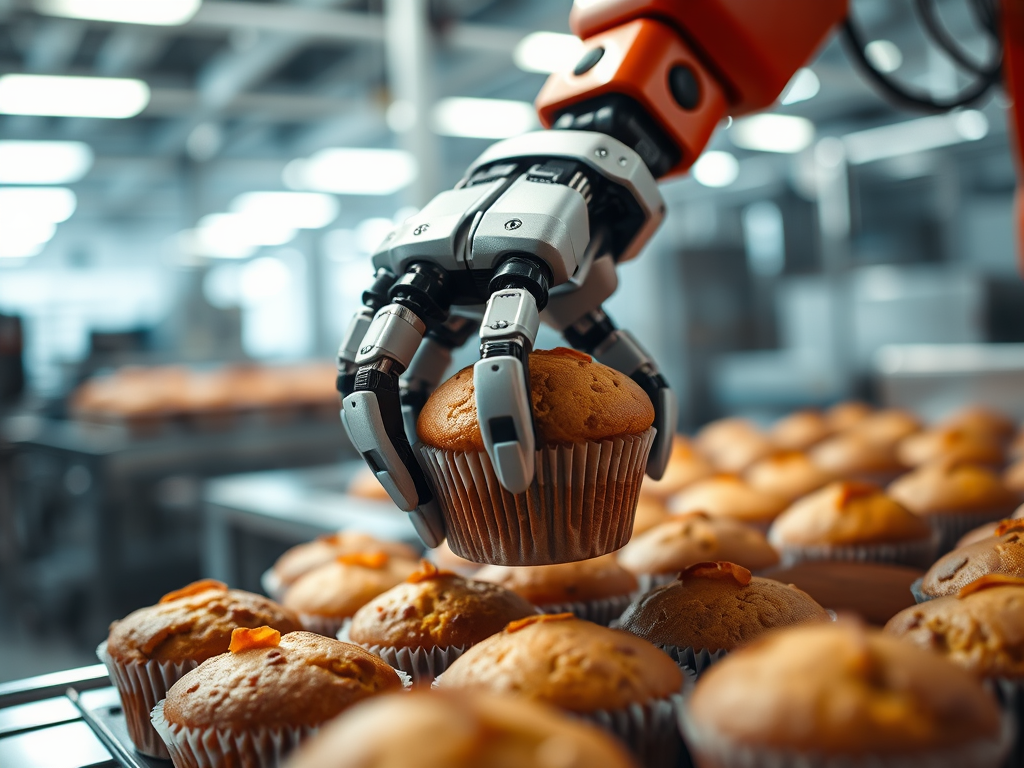
The Gentle Pro features multiple soft fingers arranged in a flexible configuration. It conforms to different object shapes and applies gentle, controlled pressure, making it suitable for handling fragile products. The Gentle Pro is used in applications requiring shape adaptability and fine grip control, such as handling baked goods, cosmetics containers, or sensitive electronics.
Modular Adaptive Grippers
The Gentle Flex is a modular gripping solution that allows users to customize the number and placement of gripping elements. This design makes it easy to adapt the gripper to new product lines or unique shapes without switching tools. Gentle Flex is ideal for high-mix environments where product variety is high and changeover time matters.
Why Choose Ubiros Electric Grippers?
Ubiros specializes in fully electrically actuated soft robotic grippers, setting them apart from traditional options. Unlike pneumatic grippers, which require an external air supply, or hydraulic grippers, which are bulky and high-maintenance, Ubiros’ electric grippers are:
- Shape- and size-adaptive, capable of gripping a single item or a mix with precision.
- Cost-effective, reducing the need for additional infrastructure like compressors or vacuum pumps.
- Lightweight, allowing for high speeds in automation without adding excessive load to robotic arms.
- Highly precise, with the ability to vary gripping force to handle delicate or firm objects.
- Low maintenance, offering a long lifespan compared to pneumatic and hydraulic alternatives.
Ubiros’ electric grippers provide force and position control, enabling them to perform better than many traditional options. Their design allows them to operate in tight spaces, making them perfect for industries requiring precise object manipulation.