
Types of Finger Grippers for Robots
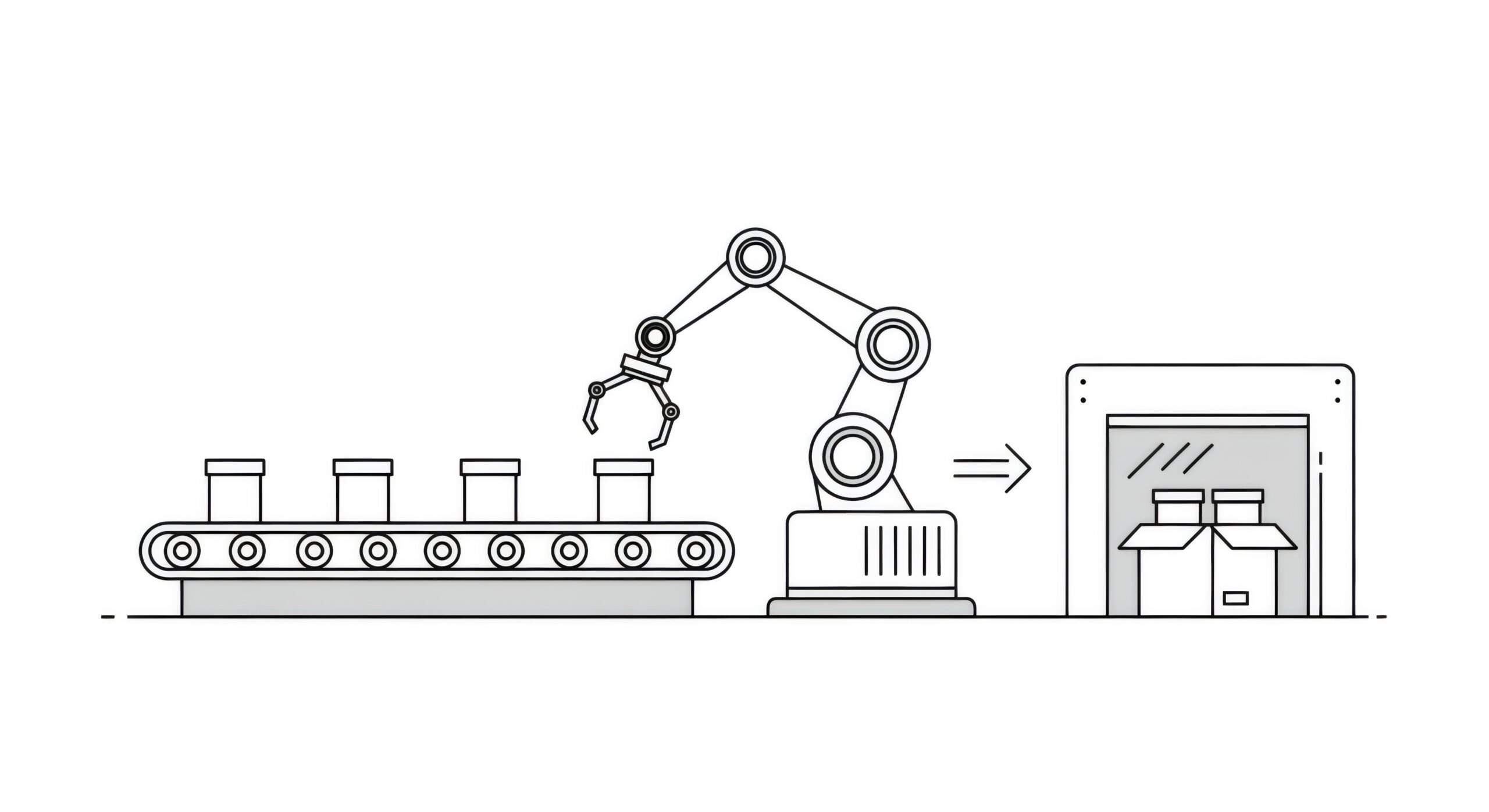
Finger grippers are robotic end effectors mounted to the end of a robotic arm that use mechanical fingers to hold, move, and release objects.
These grippers are used across many industries, including manufacturing, packaging, food handling, and electronics, to automate precise and repetitive handling tasks.
What Is a Finger Gripper?
A finger gripper uses two or more mechanical fingers or jaws to grasp parts. These robotic grippers mimic how human hands hold items but are built for speed, consistency, and high-duty cycles.
The configuration, motion, and material of the fingers all affect how the tool interacts with the object being handled, including grip strength, precision, and surface protection.
Types of Finger Grippers
Finger-style robotic end effectors come in a range of formats depending on object shape, size, and the required precision. Below are the most common types of finger grippers for robots and where they are typically used.
1. Parallel Finger Grippers
- Fingers move in a straight line toward or away from each other.
- Best for flat, square, or regularly shaped parts.
- Common in assembly, packaging, and inspection applications.
Parallel finger grippers are popular in industrial automation because they provide a simple, reliable motion profile and can securely hold many standard part geometries.
2. Angular Finger Grippers
- Fingers open and close using a pivoting motion.
- Useful for applications with tight spaces or where a wide opening is needed initially.
- Compact design makes them suitable for small parts handling.
Angular finger grippers are ideal when the gripping area is restricted, or when parts must be approached from a particular angle while still achieving a wide initial jaw opening.
3. Three-Finger Grippers
- Fingers close in a circular pattern to center the object.
- Ideal for cylindrical or round components like bottles, rods, or machined parts.
- Widely used in machining cells or where object symmetry matters.
Three-finger robotic grippers provide self-centering capabilities, making them highly effective for round or symmetric parts that require stable, concentric gripping.
4. Four-Finger Grippers
- Offer increased stability and even pressure distribution.
- Useful for handling large, soft, or awkwardly shaped parts.
- Common in food, packaging, and fragile product lines.
Four-finger designs provide extra surface contact and reduce the risk of slippage or deformation—especially when paired with flexible or padded tips.
They are a strong choice for applications where product quality and gentle handling are critical.
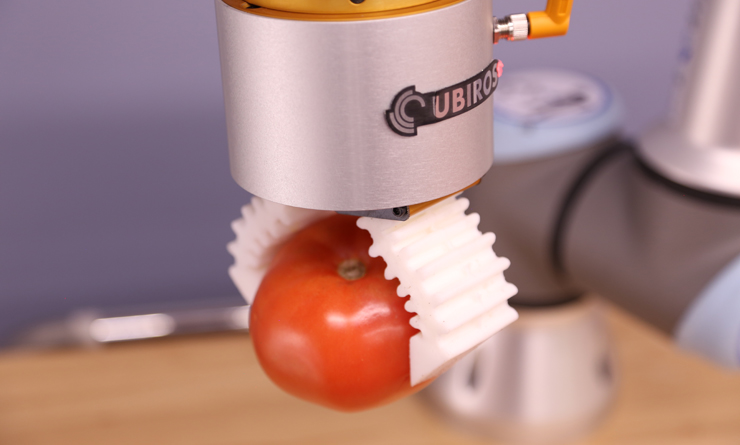
5. Soft and Adaptive Finger Grippers
- Use flexible materials or joints to mold around objects.
- Excellent for irregular shapes or fragile items.
- Often found in food, medical, and electronics applications.
Soft and adaptive finger grippers can grip items without exact alignment and are more forgiving with shape and texture variations.
They are especially useful when handling delicate products, mixed SKUs, or produce with varying geometry.
6. Custom-Machined Fingers
- Tailored to fit specific products and geometries.
- Maximize contact and minimize cycle time.
- Used for high-precision, repetitive part handling.
Custom gripper fingers are often made from metal, plastic, or composites depending on part requirements.
They are common in high-volume production where optimizing grip consistency, accuracy, and throughput directly impacts overall system performance.
Materials for Robotic Gripper Fingers
The material of the gripper fingers impacts hygiene, grip strength, durability, and surface protection.
Common options include:
- Aluminum or steel: Durable and rigid; best for industrial or high-force applications.
- Plastic or polymer: Lightweight and non-marking; good for sensitive or cosmetic surfaces.
- Food-safe silicone: Flexible, washable, and compliant with food handling regulations—ideal for bakery items, produce, or packaged goods.
Ubiros offers finger designs made from food-safe silicone for environments where sanitation and gentle handling are critical, such as food processing, bakery lines, and delicate packaging applications.
How to Choose the Right Finger Gripper
When selecting a robotic finger gripper, consider the following factors:
- Part shape and material: Flat, round, soft, rigid, or fragile?
- Environment: Cleanroom, food processing, or dusty plant floor?
- Cycle time and force requirements: Is speed or precision more important?
- Maintenance needs: Do you need washable, food-safe, or low-wear materials?
Matching the gripper type and finger material to your specific application improves robotic system performance, reduces downtime, and protects your products from damage.
Frequently Asked Questions About Finger Grippers
What is a finger gripper?
A finger gripper is a robotic tool that uses mechanical fingers to grasp, hold, and release parts during automated operations.
It is mounted to a robotic arm or linear axis and functions as the primary end effector for handling tasks.
What are gripper fingers made of?
Materials vary by application. Common choices include aluminum, stainless steel, plastic, and food-safe silicone for hygienic environments.
The best material depends on the required grip force, cleanliness, and whether the product surface is fragile or easily marked.
Which type of finger gripper is best for soft or fragile products?
Soft or adaptive finger grippers are ideal for soft, delicate, or irregular products.
They conform to uneven surfaces and apply minimal pressure to avoid damage, making them well suited for food handling, medical devices, and sensitive electronics.
Can gripper fingers be customized?
Yes. Custom gripper fingers can be machined or molded to match specific part shapes and improve grip consistency and accuracy.
Custom designs can also optimize contact surfaces, reduce cycle time, and support special requirements such as food safety or cleanroom compatibility.
If you are exploring robotic finger grippers for your application, choosing the right finger style and material is essential for reliable, gentle, and efficient automation.
Where can I buy Ubiros grippers?
You can purchase Ubiros soft grippers through our authorized distributors and online marketplaces:
- McMaster-Carr (Global) –mcmaster.com
Search for “Ubiros” or “electric soft gripper” to see available models. - EMI Corp (North America) – emicorp.com
EOAT and cobot tooling catalog, including Ubiros soft grippers. - Radwell International (Global) –Radwell Ubiros brand page
Carries multiple Ubiros gripper models and components.
- McMaster-Carr (Global) –mcmaster.com
If you don’t see stock in your region, please contact Ubiros and we’ll connect you with a distributor or integrator near you.