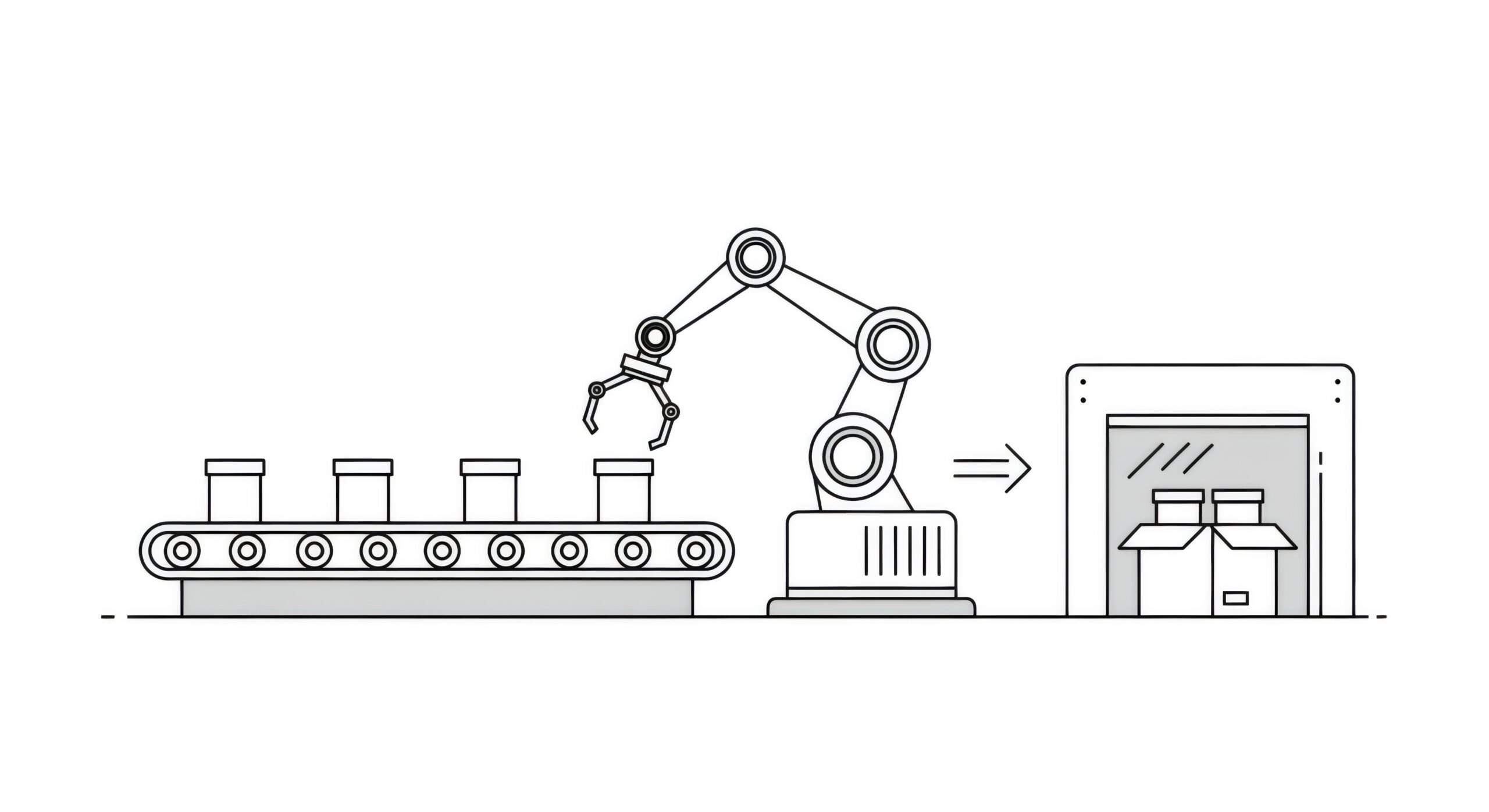

Warehouse teams need to ship more orders in less time, cut manual labor, and control costs over the long term. An automated material handling system can help. It links conveyor systems, robotic arm stations, automated guided vehicles (AGVs), and retrieval systems (ASRS) under smart control systems.
What Is Material Handling Automation?
Material handling automation means using machines instead of people for routine tasks. A complete automated handling system blends hardware and software. It moves, stores, and positions goods with little human effort.
Why Invest in Automated Material Handling Systems
Conveyor systems carry boxes and parts along set paths.
- A robotic arm grips, lifts, and places items with high precision.
- Automated guided vehicles AGVs drive loads around the floor.
- Retrieval systems, such as ASRS, store and fetch items in tall racks.
- Central control systems direct all devices in step.
Together, these material handling automation solutions speed up work. They cut errors and save on manual labor.
Key Benefits of an Automated Material Handling System
Reduce Labor Costs
Machines replace repetitive tasks. That cuts the need for many pickers and forklift drivers. Lower headcount means lower payroll. You can use the savings to invest in new tech.
Improve Efficiency
Automation processes run nonstop. Conveyors flow without breaks. AGVs deliver loads on demand. Robotic arms handle picks quickly. Together, they remove idle time and boost units per hour.
Boost System Performance
Real-time data from control systems shows you precisely what is happening. You see delays, jams, or faults at once. This lets you fix small issues before they become big, keeping uptime high.
Optimize Inventory Management
An automated system logs every move. You always know where each pallet or tote sits. That level of tracking helps you cut excess stock and avoid picking errors. It also feeds into your warehouse software for fast restocking and better order fulfillment.
Enhance Safety and Quality
Robots do heavy lifting and dangerous tasks. That lowers injury risk. Inline vision systems inspect items on the fly. They spot damage and mis-picks before orders ship. You deliver higher quality to your customers.
Support Long Term Growth
A modular design lets you add lanes, cells, or AGVs as volumes rise. You avoid major rebuilds, keeping your capital costs down over the long term.
Core Components of Material Handling Equipment Automation
Conveyor Systems
Conveyors are the backbone of any automated material handling system. They move cartons, totes, and pallets along fixed or modular paths. Common conveyor types include:
- Belt conveyors for light cartons
- Roller conveyors for heavy pallets
- Modular conveyors for quick layout changes
Conveyors link pick zones to packing and shipping. They cut walking time and speed up order fulfillment.
Robotic Arm Cells
A robotic arm cell uses a six-axis or SCARA robot. It picks parts from bins or trays and places them on conveyors, pallets, or packing stations. End-effectors, such as vacuum cups or gripper fingers, adapt to part shapes.
Advanced cells include vision sensors. These guide the arm and support automated material positioning. Robotic arm cells handle high-volume, repetitive tasks with consistent speed and accuracy.
Automated Guided Vehicles (AGVs)
AGVs move goods without fixed conveyors. They follow magnetic tape, embedded wire, or vision markers on the floor.
AGVs handle pallets, carts, or bins. You can reroute them in software without moving floor rails, offering layout flexibility as your operation grows.
Automated Storage and Retrieval Systems (ASRS)
ASRS, or automated storage and retrieval systems, store loads in tall racks. They use stacker cranes or shuttles to fetch items on demand. ASRS maximizes storage density and cuts travel time. They integrate with conveyors and AGVs to deliver picks to packing zones or production lines.
Control Systems
A PLC or warehouse execution system ties it all together. It tracks inventory, routes items, and monitors device health. Dashboards display key metrics: throughput, uptime, and error counts. Real-time alerts let you address issues quickly and maintain high system performance.
How Material Handling Automation Works
A simple example shows how these pieces fit together:
- A pallet arrives on the inbound dock.
- A barcode scanner reads the pallet ID.
- The control system sends it to the correct buffer lane via conveyor.
- When an order needs picking, an AGV arrives, picks up the pallet, and delivers it to a picking station.
- A robotic arm cell picks items from cases and places them into cartons.
- The carton is placed back on a conveyor for sealing and labeling.
- The conveyor transports the order to the shipping area.
Each step is automated, eliminating manual touches. Automated material positioning and real-time routing keep the flow steady, allowing you to meet order fulfillment targets without extra staff.
Steps to Implement Your Automated Material Handling System
Assess Your Needs
Map your current material handling process. Record volumes, error rates, and labor hours. Identify high-volume, repetitive tasks for quick wins.
Design a Pilot Cell
Combine conveyor sections, a single robotic arm station, and an AGV loop. Test with real order profiles. Measure gains in throughput and error reduction.
Plan Your Layout
Use floor plans to map conveyor routes, AGV lanes, and ASRS aisles. Include safety zones around robots and conveyors, and plan for maintenance aisles.
Choose Equipment
Select conveyors that match speeds and loads. Choose robotic arms with the reach and payload you need. Choose AGVs with the right navigation method. Size ASRS modules for your biggest SKUs.
Integrate Control Systems
Connect all devices to a PLC or warehouse execution system. Set up dashboards for live metrics. Program alerts for jams, low battery, or downtime.
Train Operators and Maintenance
Create simple how-to guides for loading conveyors, clearing jams, and resetting robots. Train maintenance teams on belt tension, roller lubrication, and sensor alignment. Preventive checks protect uptime over the long term.
Go Live in Phases
Launch during a low-volume window. Start with outbound orders, then inbound. Monitor KPIs closely and hold daily reviews. Adjust speeds, routing logic, or pick sequences as needed.
Tracking Success with KPIs
To prove ROI, track these metrics:
- Throughput: Units moved per hour versus manual baseline
- Uptime: Percent of time conveyors and cells run without faults
- Error Rate: Percent of mis-picks, jams, or misroutes
- Labor Hours: Hours of manual labor replaced by automation
Regular KPI reviews drive continuous improvement. You tweak automation processes and expand capacity where needed.
Advanced Automation Processes
Leading warehouses add machine learning and vision AI to their systems. Bin-picking cells use smart vision to handle mixed items in a tote.
AGVs use dynamic routing to avoid traffic. Collaborative robotic arms work safely beside humans to handle exceptions. These advanced setups push your efficiency even higher and future-proof your investment.
Best Practices for Long-Term Success
- Preventive Maintenance: Schedule belt, roller, motor, and sensor checks weekly and monthly.
- Continuous Improvement: Use data to tweak control logic, conveyor speeds, and pick sequences.
- Modular Design: Choose equipment that scales. Add conveyors, AGVs, or ASRS modules without major rework.
- Safety First: Install light curtains and emergency stops. Enforce lock-out/tag-out during service.
Frequently Asked Questions (FAQ)
What is an automated material handling system?
It is a network of conveyors, robotic arms, AGVs, and ASRS, all managed by control systems, that moves, stores, and retrieves goods with minimal human input.
How do material handling automation solutions reduce labor costs?
By using machines to handle repetitive tasks—like picking, sorting, and transporting—you can reduce headcount, payroll, and training expenses.
Can I integrate ASRS into my current warehouse?
Yes. Modern ASRS modules retrofit into existing racking and link to warehouse software for real-time inventory management.
What role do AGVs play?
AGVs transport pallets and totes along flexible routes, delivering goods where fixed conveyors can’t reach.
Which control systems work best for automation processes?
PLCs and warehouse execution systems coordinate devices, capture data on throughput and downtime, and feed management dashboards.
How long does implementation take?
A pilot project takes 6–8 weeks. A full rollout usually wraps up within 3–6 months, depending on warehouse size.
What maintenance is needed?
Routine inspections of belts, rollers, sensors, and software updates keep the system running smoothly over the long term.
Automated material handling systems transform your warehouse by combining the best of material handling equipment automation, automated material positioning, and automation processes. Using conveyor systems, robotic arms, automated guided vehicles (AGVs), and retrieval systems (ASRS) can help reduce manual labor. These technologies work together to make tasks easier and more efficient. This improves system performance and makes your material handling process better for today’s fast supply chain.