How to Choose the Right End of Arm Tooling (EOAT)
Robots used in industrial automation rely heavily on the tools attached to their arms. Choosing the correct End of Arm Tooling (EOAT) directly impacts a robot’s performance, safety, and effectiveness.
This guide explains what EOAT is, highlights common types, discusses essential considerations when choosing tooling, and covers trends shaping robotics today.
What is End of Arm Tooling (EOAT)?
End of Arm Tooling (EOAT) includes any device or tool attached to the end of a robot arm. EOAT helps robots perform specific tasks like picking up objects, welding parts together, or inspecting products.
Robots with EOAT are used across many industries:
Packaging
Material handling
Electronics manufacturing
Food production
Why EOAT Selection Matters
Choosing the correct EOAT is critical because using the wrong tooling can lead to major problems in your production line. Improper tooling can cause products or machinery to become damaged, leading to expensive replacements or repairs. Incorrect EOAT can also create safety risks for workers, causing injuries from sharp edges, flying sparks, or heavy impacts.
The wrong EOAT often needs frequent adjustments and maintenance, causing production downtime and increasing operational costs. It can also slow down production speeds, reducing overall productivity. Finally, inappropriate tooling may compromise product quality, resulting in inaccuracies, defects, and higher rates of rejected goods.
Benefits of Choosing the Right EOAT:
When you select the right EOAT, you will see significant improvements across your production processes. Proper EOAT can drastically speed up production by reducing cycle times, enabling more output in less time. Accurate and precise handling provided by the correct EOAT improves product quality, reduces waste, and ensures higher consistency.
The right EOAT also minimizes human errors by automating tasks previously performed manually, thus reducing workplace accidents and mistakes. A good EOAT can handle various product types, shapes, sizes, and weights, offering flexibility across multiple production lines or tasks. Ultimately, selecting suitable EOAT ensures reliability, efficiency, and overall improved system performance.
Common EOAT Types
Understanding the various EOAT types helps you choose the right tool for your specific tasks, needs, and production environment. Each type has unique strengths and limitations that should match your applications and objectives.
Grippers
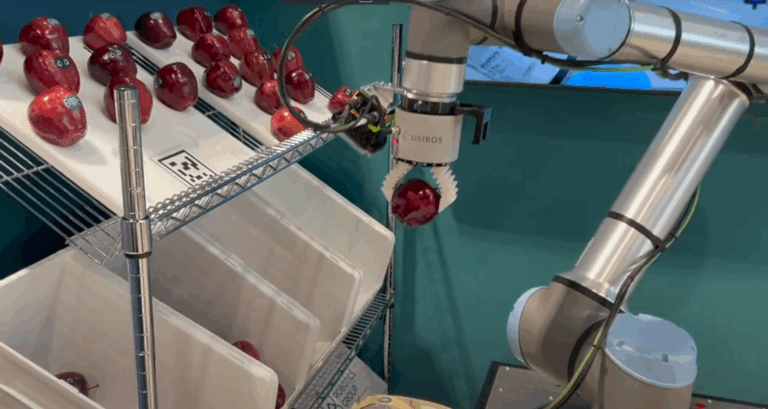
Grippers are the most common and versatile EOAT type. They handle and move objects carefully, ensuring precise placement and secure handling. Grippers can easily manage a wide range of products, from delicate items to heavy industrial parts. Electric grippers, such as those provided by Ubiros, offer high precision, easy programming, and low maintenance, making them suitable for demanding applications.
Grippers differ based on:
Material: Soft or hard jaws
Power: Pneumatic (air-powered), Electric, or Hydraulic
Vacuum Grippers
Vacuum grippers use suction cups to hold items, typically best suited for flat, smooth, and lightweight products. They excel at basic pick-and-place tasks in clean environments. However, vacuum grippers have limitations, as they may struggle with irregularly shaped or porous items, and they often require more maintenance due to suction cup wear or air leaks.
Tool Holders
Tool holders attach specialized equipment like screwdrivers or welders. These tools require precise alignment and often need regular maintenance. Tool holders are typically used in specific applications rather than flexible, multi-purpose scenarios. They often include sensors to ensure accuracy, but these systems can be more complex and less adaptable compared to grippers.
Custom and Modular EOAT
Custom EOAT solutions are built specifically for unique tasks, while modular EOAT allows robots to change tools quickly. Modular EOAT is ideal for tasks with multiple steps or varied product handling. However, these systems can be more complex to set up and maintain, potentially increasing downtime and operational complexity.
Important EOAT Components
Several key parts impact EOAT performance:
Actuators
Actuators move EOAT parts and provide the gripping force. Electric actuators, like those used by Ubiros grippers, offer excellent precision, are easy to program, and require minimal maintenance. Pneumatic actuators, while simple and robust, lack precision and may need frequent air supply maintenance. Hydraulic actuators deliver strong force but are messy, complex, and require regular maintenance and monitoring.
Sensors
Sensors enhance EOAT capabilities by providing important feedback during operations. Proximity sensors detect the presence and positioning of products, essential for accurate handling. Force and torque sensors measure the applied grip pressure, critical for delicate or fragile products. Vision sensors enable EOAT to identify and precisely target products, ensuring reliable picking and placement.
Factors to Consider When Choosing EOAT
Consider these key points before choosing your EOAT:
Specific Application Needs
Clearly defining the robot’s primary tasks is vital. Grippers are ideal for general and varied tasks, especially when flexibility and precision are essential. Consider the type of objects handled, their weight, fragility, and shape. Detailed knowledge of these factors will guide you toward EOAT that can effectively handle your specific needs.
Payload Capacity
The EOAT you select must align with your robot’s payload limits. Choosing tooling close to the robot’s maximum payload can cause strain and early wear. Always select EOAT with a comfortable margin below your robot’s maximum payload to ensure long-term reliability and consistent performance.
Precision
Tasks that require high accuracy, such as assembling electronics or handling pharmaceutical products, demand precise EOAT. Electric grippers excel here by providing consistent grip force and accurate movements. Evaluate the precision requirements carefully and ensure your EOAT meets these stringent standards.
Robot Compatibility
EOAT must easily integrate with your robot’s existing system. Check compatibility with your robot’s mounting interface, electrical connections, and control software. Choosing EOAT designed for easy integration, like Ubiros electric grippers, ensures minimal setup time, reduced complexity, and lower maintenance needs.
Production Speed
EOAT performance can significantly influence production speed. Grippers with quick and precise movement reduce cycle times, boosting overall throughput. Assess your production speed requirements and select EOAT that can comfortably meet or exceed these expectations to avoid bottlenecks and maintain efficiency.
Integrating EOAT Effectively
Benefits of Good Integration
Efficient EOAT integration means quicker setup, less downtime, and higher-quality output. Choose tooling compatible with major robot brands for smooth operation and minimal downtime.
EOAT Software
Advanced EOAT comes with programmable software, allowing operators to fine-tune gripping force, speed, and movement paths easily. This flexibility is critical when handling delicate products or when precision placement is necessary.
Future Trends in EOAT
EOAT technology is rapidly evolving, with innovations that enhance efficiency and versatility in various applications. These advancements are driven by the need for automation and precision in manufacturing processes, leading to more sophisticated end-of-arm tooling solutions. As a result, businesses are increasingly adopting these technologies to optimize their operations and improve productivity.
Soft robotics: Better handling of delicate or irregular items
Modular EOAT: Easy adjustments for diverse tasks
Intelligent EOAT: Uses artificial intelligence to improve grip accuracy and error handling
Choose the Right EOAT
Choosing EOAT is about finding tools that perfectly match your production needs. Ubiros specializes in reliable, precise electric grippers and modular solutions. Our EOAT products address current manufacturing challenges and ensure your systems are ready for future developments. Partner with Ubiros to maximize the potential of your robotic automation.